The 5 best URL shorteners in 2025
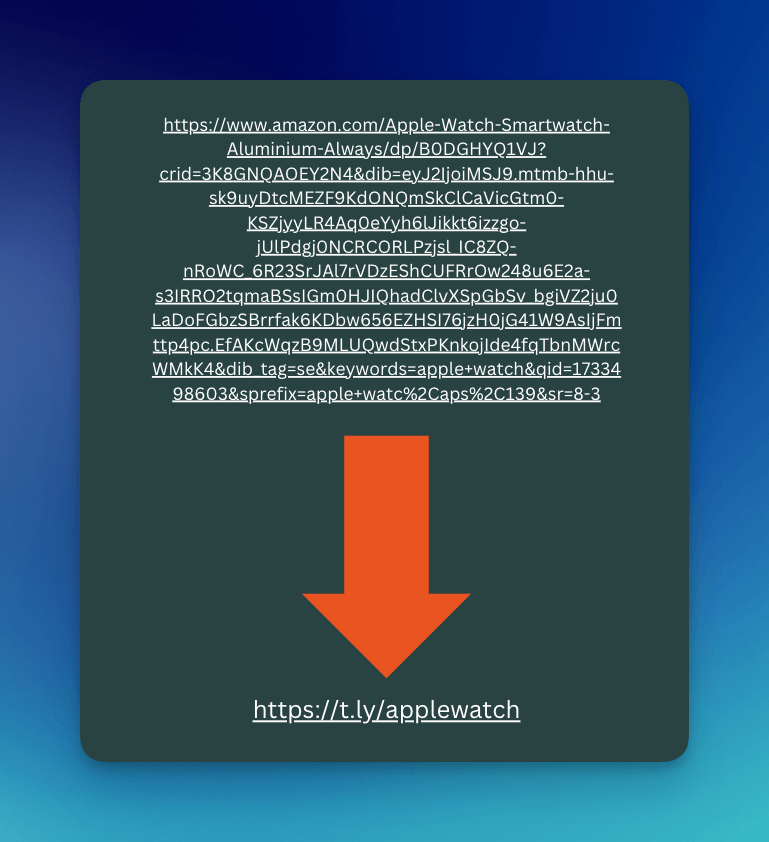
If you've been online for more than a week, you know what long URLs look like: random letters, numbers, and punctuation marks that do little more than confuse users. Whether you're a digital marketer trying to track campaigns or just someone who appreciates a clean link, a good URL shortener is worth its weight in gold. Fast-forward to 2025, and we've got a handful of standout options that not only tidy up your links but also offer some seriously advanced features.
You can use the first tool you find on Google, but the differences matter. Some shorteners are built for quick one-off links. Others are better for branding, analytics, and team workflows. Here are five worth comparing in 2025, with the tradeoffs that actually matter.
1. T.LY URL Shortener
It is best for Marketers, small businesses, and freelancers who want an all-in-one URL management tool without losing their sanity or breaking the bank.
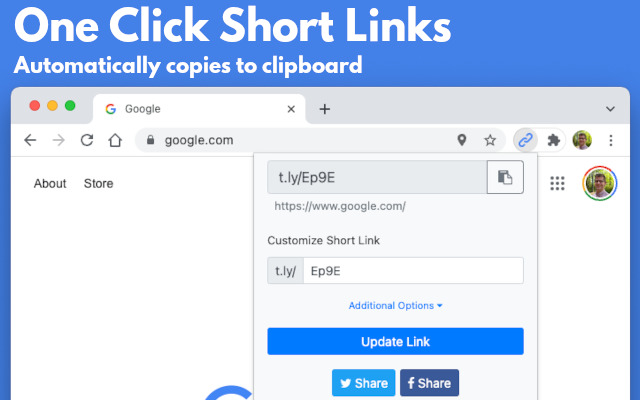
We are putting T.LY first because it does a lot well without getting bloated. It has grown from a simple shortener into a full link management platform, with custom domains, detailed analytics, and easy QR code generation. The browser extension, now used by more than 500,000 people, also makes day-to-day sharing faster.
Key features:
- A simple, intuitive dashboard will quickly get you up and running, even if you're new to URL shorteners.
- Detailed analytics: Get click counts, geographic data, and referral sources without digging.
- Custom domains: Keep your branding consistent and your links memorable.
- Reliable uptime: No one wants their link to break at the worst, so T.LY's infrastructure prioritizes reliability.
Where it could improve:
- Enterprise-level integrations: While T.LY does offer integrations, there's always room for deeper connections with large-scale marketing and CRM tools.
- Advanced team management features: A few more granular permission controls would be a welcome addition for big teams.
Bottom line: T.LY perfectly balances straightforward usability and advanced functionality, making it a top contender in the URL-shortening landscape.
2. Bitly
Best for: Established brands and enterprise-level marketers who want tried-and-true features and a name everyone recognizes.
Bitly was founded in 2008 as a simple fix for long, awkward URLs. It caught on quickly because it was reliable and easy to use, and Twitter helped make Bitly links feel almost unavoidable for a while. Over time, Bitly added analytics, branded links, and paid features that turned it into a broader marketing tool.
If you've ever clicked a shortened link on social media, you've probably landed on a Bitly link. By 2025, it is a mature platform with branded links, campaign tracking, and analytics dashboards. Just be ready for the pricing if you want more than the basics. Compare T.LY and Bit.ly
Key features:
- Brand recognition: Everyone knows Bitly.
- Solid analytics: Get a good overview of who's clicking and where.
- Scalability: With enterprise packages, it can handle substantial link volumes and complicated workflows.
Where it could improve:
- Pricing for small users: Bitly's pricing can feel steep if you're not using every feature.
- User experience: Compared to more modern options, the interface feels a bit dated.
3. Rebrandly
Best for: Businesses serious about brand consistency and advanced analytics.
Rebrandly showed up in the mid-2010s with a clear angle: branded links first. Instead of treating shortening as the whole product, it leaned hard into custom domains, brand recognition, and marketing workflows. Over time, it added richer analytics, routing options, and a long list of integrations.
Rebrandly focuses on custom-branded links, so if brand consistency matters a lot to you, this may be the pick. It offers custom domain options, link routing, and detailed analytics, and it fits well into bigger marketing stacks. Compare T.LY and Rebrandly
Key features:
- Serious branding tools: Multiple custom domains, link customization, and tracking parameters.
- Integrations: Works with a wide range of third-party platforms.
- Team collaboration: Manage user roles, permissions, and multiple workspaces.
Where it could improve:
- Learning curve: All those features can feel overwhelming at first.
- Cost: Similar to Bitly, advanced features have a higher price tag.
4. TinyURL
Best for: Casual users who want something quick, easy, and free.
TinyURL has been around forever, long before URL shorteners became standard marketing tools. Back then, it felt revolutionary. By 2025, though, its age is starting to show.
One big issue? The links it generates aren't all that short anymore. The "tinyurl.com" domain itself is already pretty long, and because the service has been around for so many years, it's running out of short character combinations to use for new links. As a result, TinyURL has had to generate longer and longer URLs over time to keep up with demand.
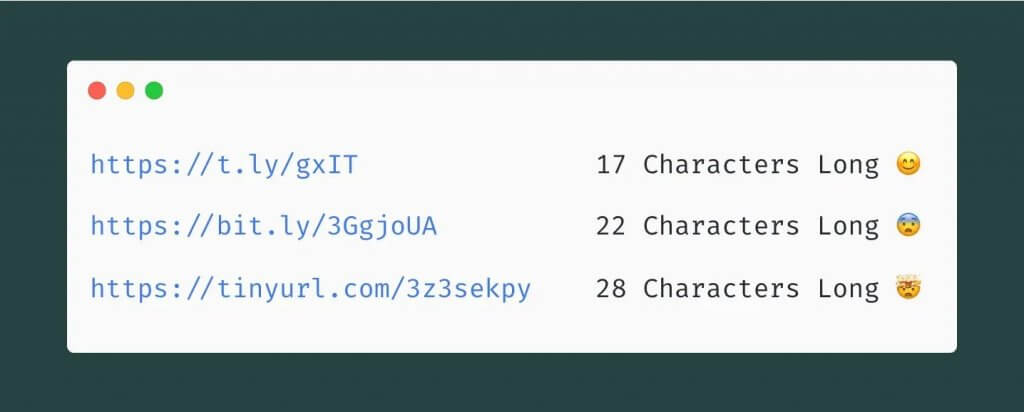
For casual users, that may not matter much. But if you care about clean, branded links, a "short" URL that is not actually that short starts to feel dated. TinyURL deserves credit for paving the way, but there are better options now. Compare T.LY and Tinyurl
Key features:
- Simplicity: No login is required, and there are no complicated dashboards.
- Reliability: It's been around forever and still works just fine.
Where it could improve:
- Lack of analytics: If you're serious about tracking clicks, look elsewhere.
- Branding limitations: You can't do much more than shorten a link.
- Length of Links: The length of the domain and limited short character combinations cause the urls to be long
5. Ow.ly (Hootsuite)
Best for: Social media managers and teams already living in the Hootsuite ecosystem.
Ow.ly began as Hootsuite's built-in URL shortener. Its main selling point has always been convenience for social teams already working inside Hootsuite. Over time, it became more tightly connected to Hootsuite's scheduling and analytics tools, which is still the main reason to use it.
If your life revolves around scheduled posts, social analytics, and engagement metrics, Ow.ly can fit neatly into your workflow.
Key features:
- Built-in Hootsuite workflow: If you're already using Hootsuite, it is right there with no extra tabs or logins.
- Social-focused analytics: See how your links perform across different platforms and campaigns.
Where it could improve:
- Limited standalone functionality: Ow.ly doesn't bring much to the table outside of Hootsuite.
- Less flexibility: Custom domains and advanced analytics are not as deep as some competitors.
How to Choose the Right URL Shortener
In 2025, the URL shortener you pick should fit your exact workflow. If you're just a casual user, a quick and free tool like TinyURL might be all you need. For serious marketers and business owners, T.LY and Rebrandly provide in-depth analytics, branding features, and integrations that deliver real value. And if you're embedded in a social media management platform, Ow.ly might be the most straightforward option.
If you want another lightweight option to explore, ShortURL is also worth a look for simple short-link creation.
Your links do more than send people somewhere. They shape trust, branding, and how easy it is to measure what worked. All five tools here have a place, but T.LY stands out for the balance of features, ease of use, and price.
Related Posts



Tim Leland
Useful Tools
Ready to improve how you manage links?
T.LY URL Shortener makes long links look cleaner and easier to share! Add your own Custom Domains to personalize your brand. Create Smart Links to customize a URL's destination. Generate QR codes to promote your business.
Sign Up for Free Browser Extension